ECB
13 hours agoNews Editor

ECB’s Lane says AI adoption will shape euro area productivity growth

European Central Bank Executive Board member Philip R. Lane said AI adoption will be a key driver of productivity growth in the euro area over the next several years, while AI-related spending is already acting as an important support for the region’s economy. In his remarks, Lane pointed to a sharp rise in digital investment across the euro area, saying real digital investment has increased 73% since 2014 and its share of GDP has climbed from 2.3% to 3.3%. He also said companies reported that AI has lifted their capital expenditure plans for this year by about 10%. Lane added that AI was the main force behind global goods trade over the past year. At the same time, he said higher AI-related prices have had only a limited effect on overall inflation in the euro area, according to the ECB.


30
ECB’s Lane says AI adoption will shape euro area productivity growth
European Central Bank
5 days agoNews Editor

ECB board member says digital euro is tied to Europe’s payment sovereignty, with live pilot planned for 2027

European Central Bank Executive Board member Piero Cipollone said a digital euro could give Europe greater sovereignty over its payment infrastructure and reduce reliance on non-European third-party providers. He said the project is scheduled to enter a pilot phase in 2027, using real transactions carried out by staff at the ECB and national central banks. A total of 36 market operators are involved in the preparation work, including seven from Italy, while the ECB has also invited e-commerce and mobile commerce operators to take part. Cipollone said two-thirds of euro area card transactions are managed by non-European companies, and argued that a digital euro could offer payment infrastructure controlled within Europe. The ECB’s Governing Council will decide on issuance after legislative negotiations in Brussels conclude. If the relevant rules are approved by the end of this year, the digital euro could be launched as early as 2029, according to Cointelegraph.

260
ECB board member says digital euro is tied to Europe’s payment sovereignty, with live pilot planned for 2027
ECB
7 days agoNews Editor

ECB survey shows euro area consumers lifted 12-month inflation expectations to 3.1%

The European Central Bank released the results of its September 2026 Consumer Expectations Survey, showing a modest rise in short-term inflation expectations among consumers. Compared with August, the median expectation for inflation over the next 12 months increased to 3.1%. Expectations for inflation three years ahead and five years ahead were unchanged at 2.9% and 2.5%, respectively. The survey also pointed to weaker sentiment on growth and jobs. Consumers lowered their expectation for economic growth over the next 12 months to -1.5%, while expected unemployment over the same period rose to 11.3%. At the same time, expectations for nominal income growth edged up to 1.1%, and expected spending growth increased slightly to 3.7%. On housing, consumers raised their expectation for home price growth over the next 12 months to 3.5%. Expectations for mortgage interest rates over the same horizon were unchanged at 4.9%. The figures were published in an ECB news release.

310
ECB survey shows euro area consumers lifted 12-month inflation expectations to 3.1%
European Central Bank
13 days agoNews Editor

Lagarde says sound public finances remain a key pillar of economic stability

European Central Bank President Christine Lagarde said sound public finances are a key pillar of economic stability, according to a ChainCatcher newsflash. She said governments should make sure fiscal measures introduced to respond to the energy shock remain temporary and targeted. Lagarde also reiterated that the euro area economic outlook faces downside risks, while inflation risks are tilted to the upside. The remarks focused on fiscal discipline, the design of energy-related support measures, and the balance of risks facing the eurozone economy and inflation.

540
Lagarde says sound public finances remain a key pillar of economic stability
European Central Bank
24 days agoNews Editor

ECB Executive Board Member Says Lack of a Digital Euro Could Fragment the Monetary System

An Executive Board member of the European Central Bank said a digital euro would not replace banks, but could help preserve their role within the European Union’s monetary system. The official warned that without a digital euro, the euro area’s monetary system could face fragmentation. According to the remarks cited in the report, the project is designed to offer a safe and convenient central bank digital currency while preserving financial stability and the banking sector’s intermediation function. The European Central Bank is continuing to advance the digital euro initiative as it responds to technological change in payments. The item was carried by Techub News and cited Cointelegraph as the source referenced in the brief.

450
ECB Executive Board Member Says Lack of a Digital Euro Could Fragment the Monetary System
ECB
1 months agoNews Editor

Lagarde says AI investment in Europe is rising, but still trails the U.S.

European Central Bank President Christine Lagarde said investment tied to artificial intelligence is increasing in Europe, though it still remains behind the United States. In a post on social media, Lagarde said unlocking AI’s productivity potential will require substantial capital spending. She also cited a European Central Bank survey showing that euro area companies expect to allocate about 10% of their total investment to artificial intelligence in 2026. The remarks point to growing corporate interest in AI across the region, while also highlighting the gap that still exists between Europe and the U.S. in AI-related investment. Lagarde’s comments were published via the ECB’s social media account.

550
Lagarde says AI investment in Europe is rising, but still trails the U.S.
JPMorgan
1 months agoNews Editor

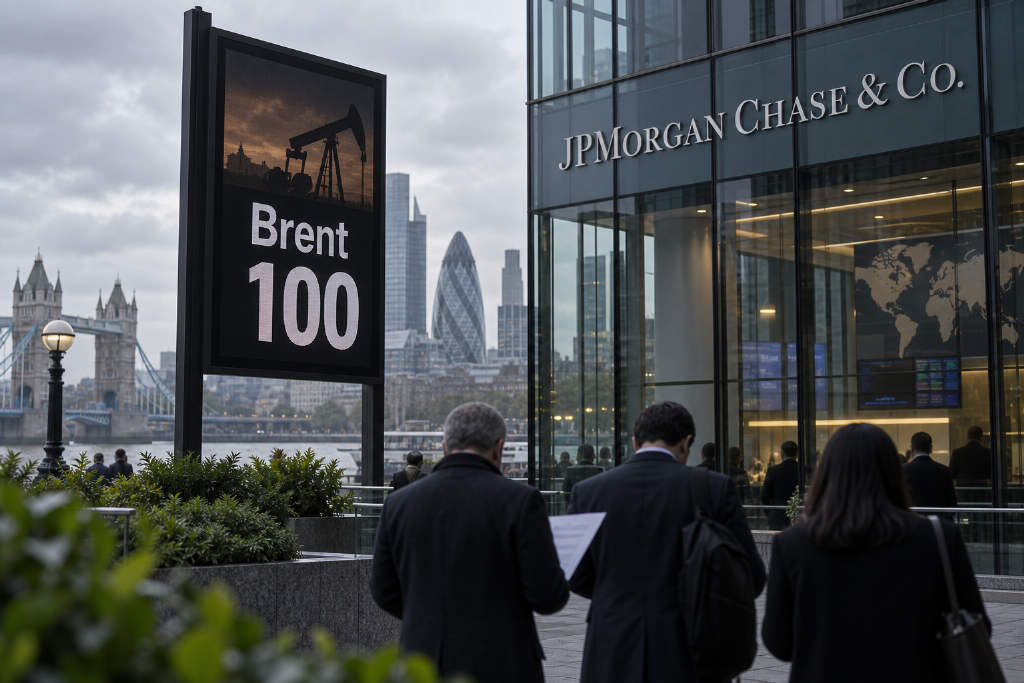
JPMorgan says Brent above $100 has hit sentiment, but the equity pullback still looks buyable

JPMorgan argued in a Sept. 14, 2026 equity strategy report that the recent sell-off in global stocks, triggered after Brent crude moved above $100 and reached $107.6 on Sept. 10, should be viewed as a buying opportunity rather than a reversal in trend. The bank said oil prices are likely to steer risk appetite in the near term, yet warned against projecting the latest bout of volatility too far into the future. Strategist Mislav Matejka said the market has repeatedly gone through an “escalation to de-escalation” pattern over the past two years, and investors who turn bearish purely on the oil shock risk being caught out if tensions ease. The report also pointed to improving earnings revisions, firmer manufacturing data in the euro area and the U.S., and bond yields that remain below the level where stock-bond correlations could flip. JPMorgan kept an overweight on equities, a neutral stance on bonds, and an underweight on cash. Regionally, it favored emerging markets and the euro area, while sector preferences remained tilted toward materials, industrials and consumer discretionary. The bank said the main risks still come from a further spike in oil and any fresh geopolitical escalation.

920
JPMorgan says Brent above $100 has hit sentiment, but the equity pullback still looks buyable
JPMorgan
1 months agoNews Editor

JPMorgan says oil-driven equity pullback is a buying opportunity, keeps overweight on stocks

JPMorgan said in a Sept. 14, 2026 equity strategy report that the latest global stock-market pullback, triggered by Brent crude breaking above $100 and higher bond yields, should be treated as an opportunity to add equity exposure rather than a signal to join the sell-off. The bank argued that the trend in equities has not reversed, even as risk appetite remains sensitive to near-term moves in oil. It also said third-quarter earnings, starting in October, could help calm markets. The report, written by analyst Mislav Matejka, said Brent reached $107.6 on Sept. 10 and that the recent setup fits the bank’s repeated "escalation to de-escalation" pattern seen over the past two years. JPMorgan maintained overweight on equities, neutral on bonds and underweight on cash. Regionally, it favors emerging markets and the euro area, while keeping the U.S., Japan and the U.K. at neutral. By sector, it prefers materials, industrials and consumer discretionary, while staying underweight energy, consumer staples, healthcare and financials. The bank added that a further spike in oil prices and geopolitical escalation remain the main risks.

1520
JPMorgan says oil-driven equity pullback is a buying opportunity, keeps overweight on stocks
Total 15 items
Go topage